
Independent Global Execution Risk Rating Bureau
Execution Risk in Transformation Under Changing Conditions
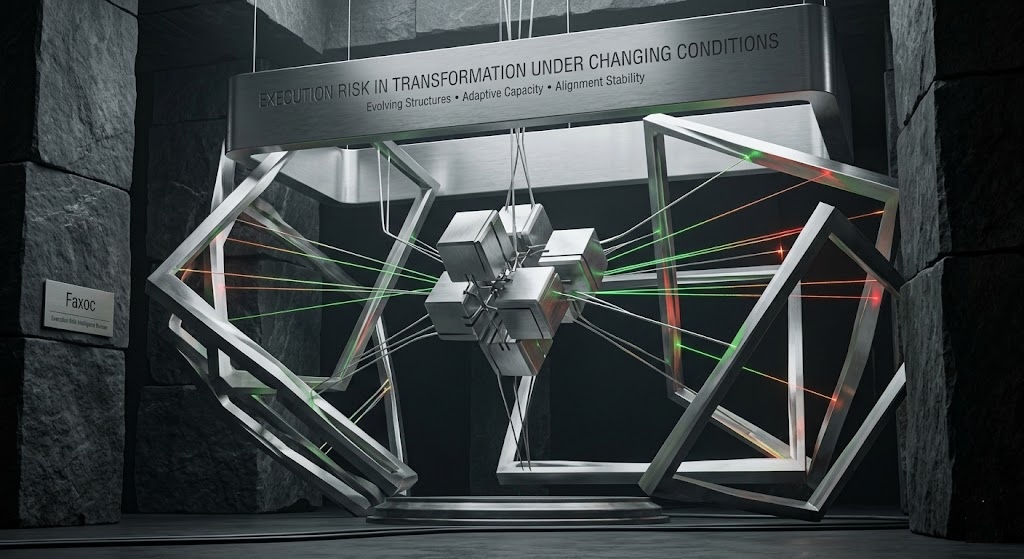
Transformation initiatives introduce shifts in operating models, governance structures, and execution environments. These changes alter execution conditions, increasing the likelihood of structural misalignment. Execution risk Read More
Benefits

Continuity Visibility
Execution risk evaluation provides visibility into whether execution continuity can be sustained during transformation, enabling organizations to assess stability under changing structures......
Read More
Alignment Assurance
Assessing execution risk ensures alignment between transformation mandates and existing execution conditions, reducing the likelihood of structural misalignment as operating models and......
Read More
Early Identification
Execution risk evaluation identifies emerging structural strain early in transformation phases, enabling organizations to detect potential instability before it impacts execution flow......
Read More
Change Stability
By evaluating execution conditions during transformation, organizations can maintain stability in execution flow, minimizing disruption caused by evolving governance, coordination demands, and......
Read More
Decision Support
Execution risk insights support informed decision-making during transformation by providing a structured view of execution feasibility under changing mandate requirements and organizational......
Read More
Execution Reliability
Evaluating execution risk improves reliability of transformation outcomes by ensuring execution conditions remain aligned with mandate complexity throughout different phases of transformation......
Read More
Assessing Alignment Between Transformation Mandate and Environment
Transformation mandates often require new capabilities, coordination models, and decision processes. This assessment evaluates whether the existing operating environment supports these evolving requirements. Misalignment between mandate demands and execution conditions can introduce instability. By assessing alignment, organizations can determine whether execution structures are capable of sustaining continuity as transformation progresses across functions and systems.
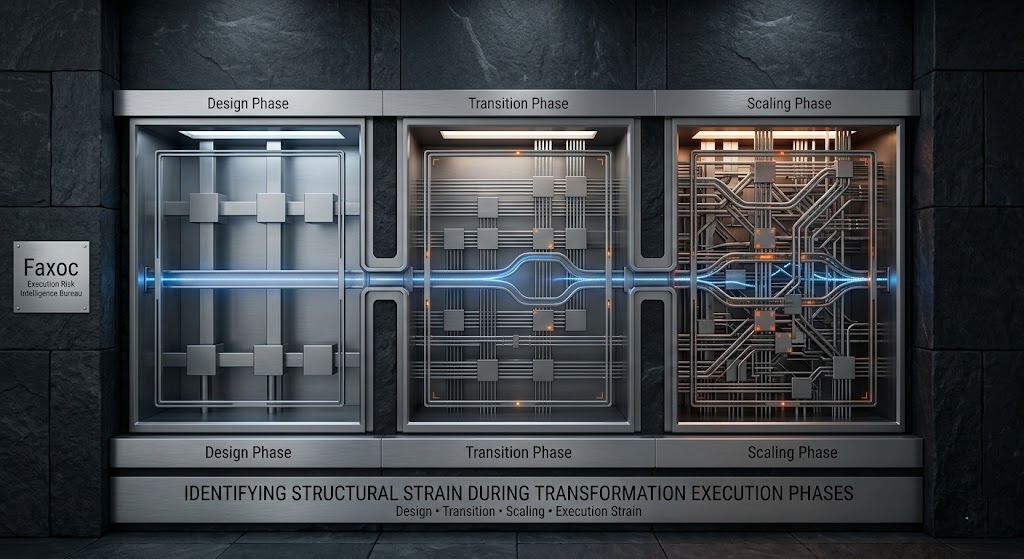
Identifying Structural Strain During Transformation Execution Phases
Execution risk during transformation emerges progressively across different phases, including design, transition, and scaling. Structural strain may appear as increased coordination complexity, decision delays, or inconsistencies in execution flow. These conditions are often normalized rather than identified as risk indicators. By identifying structural strain early, organizations can understand where execution instability may develop before it impacts transformation outcomes.
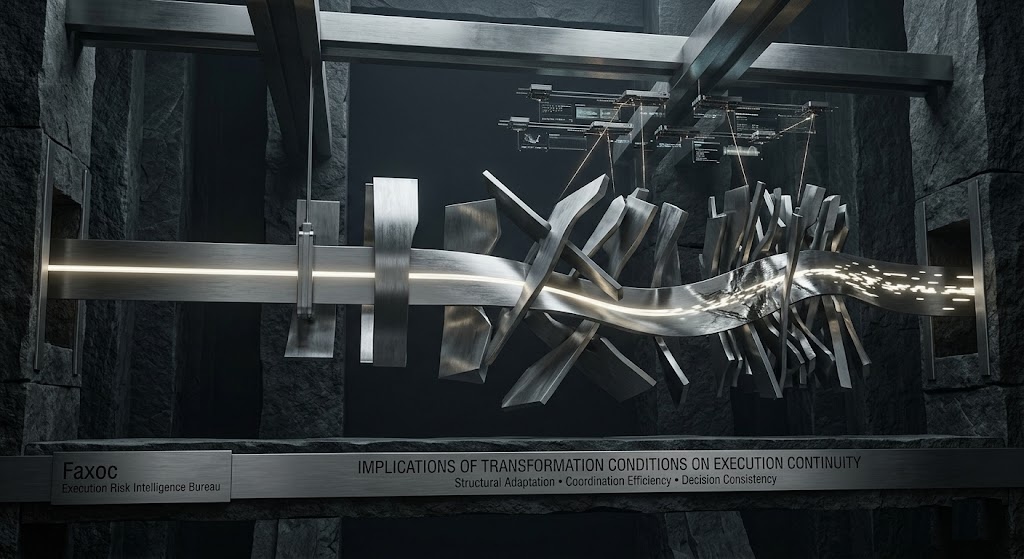
Implications of Transformation Conditions on Execution Continuity
Transformation environments introduce variability in execution conditions, affecting stability, coordination efficiency, and decision consistency. Execution continuity depends on how well leadership structures, governance mechanisms, and execution processes adapt to these changes. Understanding these implications enables organizations to anticipate execution challenges and maintain alignment between evolving mandate requirements and execution conditions throughout transformation initiatives.