
Independent Global Execution Risk Rating Bureau
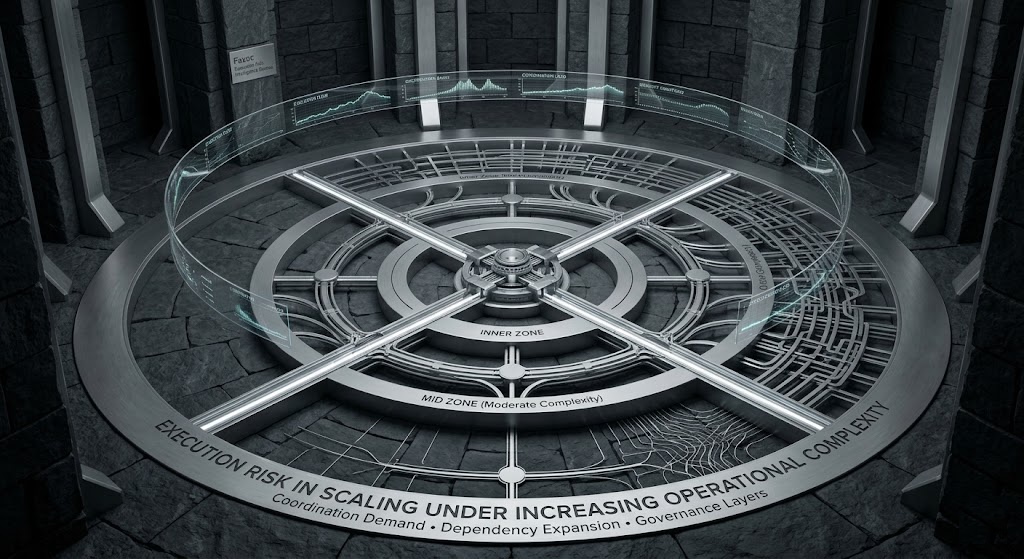
Execution Risk in Scaling Under Increasing Operational Complexity
Operational scaling increases coordination demand, expands dependency networks, and introduces additional governance layers. These changes alter execution conditions and can create structural strain if not aligned with mandate Read More
Benefits

Scalable Continuity
Execution risk evaluation ensures operations can scale without disrupting execution flow, maintaining continuity as coordination complexity, dependency load, and governance layers expand......
Read More
Capacity Alignment
Aligns execution capacity with scaling demands, ensuring systems, teams, and leadership structures are capable of supporting increased operational volume without introducing instability......
Read More
Coordination Control
Provides structured insight into coordination pathways across expanding teams and functions, enabling organizations to manage complexity and prevent breakdowns in execution flow......
Read More
Strain Detection
Identifies early signs of structural strain emerging from scaling pressures, including bottlenecks, decision delays, and fragmented ownership across increasingly complex execution environments......
Read More
Execution Consistency
Maintains consistency in execution outcomes as operations expand, ensuring delivery standards and performance reliability are preserved under varying levels of scale and......
Read More
Complexity Management
Supports structured management of operational complexity by evaluating how governance, dependencies, and execution processes evolve, enabling controlled scaling without systemic disruption......
Read More
Assessing Alignment Between Scale Requirements and Execution Capacity
Scaling initiatives require alignment between growth objectives, execution capacity, and operating conditions. This assessment evaluates whether current structures can support increased volume, complexity, and coordination demands. Misalignment between scaling requirements and execution conditions introduces variability in outcomes. By evaluating alignment, organizations can determine whether execution systems are capable of sustaining reliable performance under expanding operational scope.

Identifying Structural Strain Across Expanding Execution Systems
As operations scale, structural strain often emerges through coordination bottlenecks, decision delays, and fragmented ownership across functions. These conditions reflect underlying misalignment in execution design. This analysis identifies where execution flow may weaken as scale increases. Early detection of such strain enables organizations to address inefficiencies before they compound into systemic execution instability.

Implications of Scaling Conditions on Execution Continuity Outcomes
Scaling environments introduce variability in governance structures, coordination pathways, and execution processes. These factors directly influence execution continuity and outcome reliability. Stable scaling depends on maintaining alignment between execution conditions and expanding operational demands. Understanding these implications allows organizations to anticipate execution challenges and sustain consistent performance as operational complexity grows.