Execution Risk Audit Brings Structural Visibility Early | Global Execution Risk Ratings Bureau

Independent Global Execution Risk Rating Bureau

Execution Risk Audit Brings Structural Visibility Early

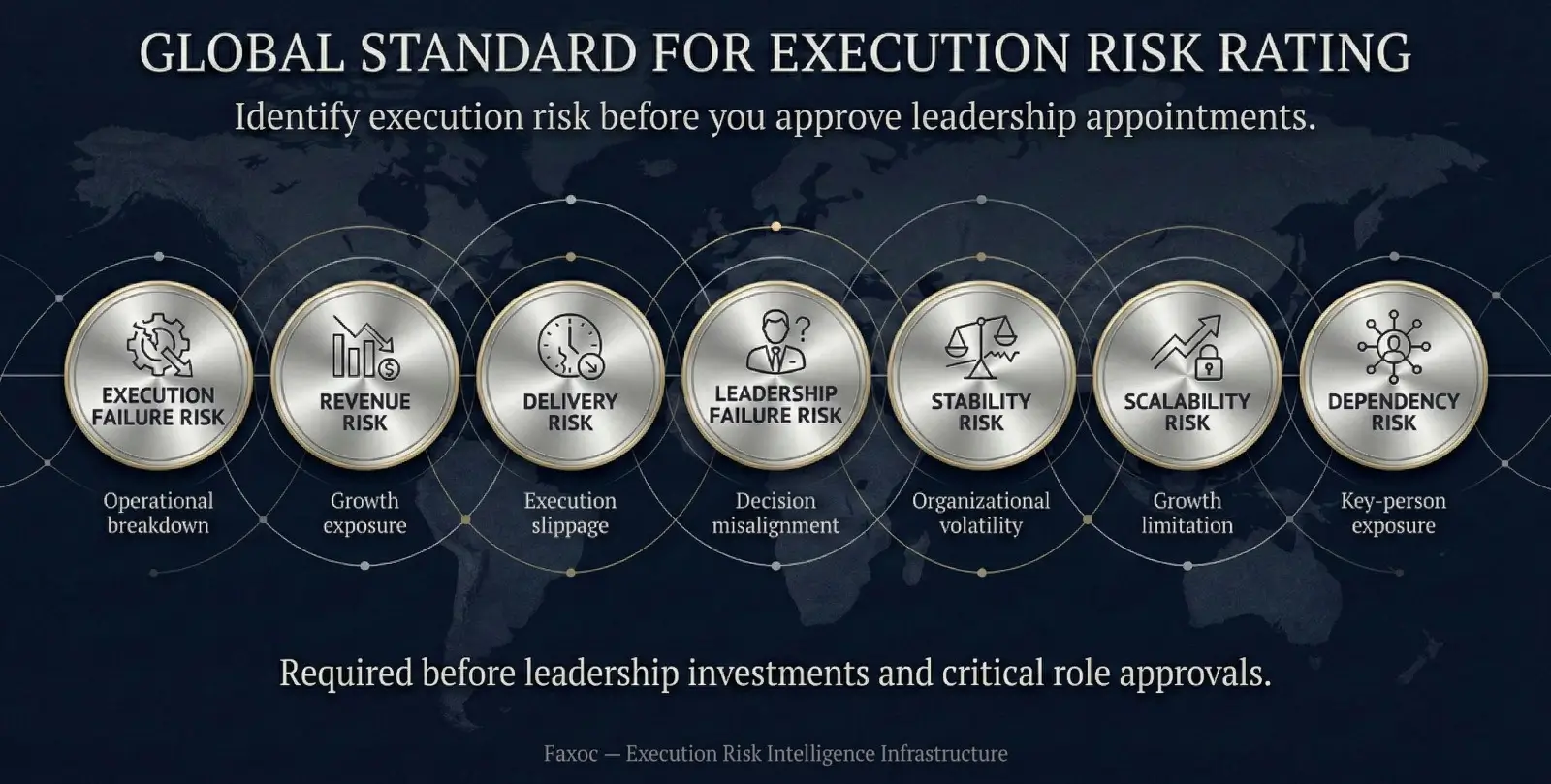
Execution risk often remains undetected until delivery begins to deteriorate. Traditional evaluation approaches focus on outcomes rather than the structural conditions that shape execution. An execution risk audit introduces ea Read More

View Sample ReportGenerate Risk Report
hero image

Benefits

Early Visibility

Provides early visibility into structural execution risks before delivery begins, allowing organizations to identify instability signals and address potential disruptions proactively rather......

Read More

Improved Allocation

Enables more informed critical role allocation by evaluating execution risk alongside capability, ensuring mandates are assigned within conditions that support stable and......

Read More

Hidden Risk Detection

Uncovers hidden execution exposure within mandate conditions, including governance complexity and dependency structures, that traditional evaluation methods often fail to identify before......

Read More

Reduced Disruption

Minimizes execution breakdowns by identifying structural misalignment early, enabling organizations to stabilize delivery conditions and prevent costly delays, operational resets, and resource......

Read More

Governance Confidence

Strengthens board and executive confidence by providing structured, evidence-backed insights into execution conditions, supporting more transparent and defensible decision-making processes......

Read More

Execution Stability

Enhances overall execution stability by aligning mandate architecture with operating environments, reducing friction and ensuring continuity across complex initiatives and critical organizational......

Read More

Auditing Mandate Conditions Reveals Hidden Execution Exposure

Every critical role operates within a set of structural conditions that influence how execution unfolds. Governance complexity, decision velocity, cross-functional dependencies, and ownership distribution all contribute to execution stability. An execution risk audit systematically evaluates these mandate conditions to uncover hidden exposure that may not be visible through traditional assessments. This approach enables organizations to understand how execution will behave within the real operating environment of the mandate.

Early Risk Detection Prevents Costly Execution Disruptions

Execution disruptions often result in delayed timelines, resource inefficiencies, and operational resets. These outcomes are typically preceded by structural misalignment that could have been identified earlier. Execution risk audits shift the focus from reactive problem-solving to proactive detection. By identifying misalignment before execution begins, organizations can strengthen delivery conditions, reduce friction, and maintain continuity across critical initiatives without incurring avoidable operational costs.

Faxoc Enables Independent Execution Risk Audit Framework

Faxoc provides an independent, structured framework for auditing execution risk associated with critical roles and mandates. By analyzing mandate architecture, execution environments, and alignment with prior operating conditions, Faxoc generates evidence-backed insights into execution exposure. This enables boards and executive teams to evaluate execution risk with greater clarity and confidence. The result is a more disciplined approach to mandate allocation, improved execution stability, and stronger governance over strategic initiatives.